 In my practice of traditional medicine, I've come to realize quite many factors are involved in the recovery of sickness and illnesses. We all know there are many illnesses and sicknesses about body of human beings. How diseases develop and change is getting more and more complicated. Methods to treat or cure, however, are not that many and far reaching. Therefore if factors such as attitude, mindset, living lifestyle, diets and others can be of positive and appropriate ones, recovery of course will turn out to be better, and faster.
If certain factors are not cooperative, it will be difficult to help/treat/cure...
According to 扁鵲(Bian Que), there are six scenarios/situations/patterns in which it's not easy to treat and must be approached with great care:
Title: 六不治, Liu Bu Zhi, Six-(patterns/traits)-not-(easily)-treatable
+++++++++++++++++++++++
驕恣不論於理,一不治也;
輕身重財,二不治也;
衣食不能適,三不治也;
陰陽并,藏氣不定,四不治也;
形羸不能服藥,五不治也;
信巫不信醫,六不治也。
有此一者,則重難治也。
+++++++++++++++++++++++
In PinYin pronunciation:
1. Jiao Zi Bu Lun Yu Li, Yi Bu Zhi Ye;
2. Qing Shen Zhong Cai, Er Bu Zhi Ye;
3. Yi Shi Bu Neng Shi, San Bu Zhi Ye;
4. Yin Yang Bing, Zang Qi Bu Ding, Si Bu Zhi Ye;
5. Xing Lei Bu Neng Fu Yao, Wu Bu Zhi Ye;
6. Xin Wu Bu Xin Yi, Liu Bu Zhi Ye.
You Ci Yi Zhe, Ze Zhong Nan Zhi Ye.
+++++++++++++++++++++++
1. Arrogant attitude not rationalized on truth, one not (easily) treatable thus;
2. Ignore body emphasize money, two not (easily) treatable thus;
3. Clothes diets not able suitable, three not (easily) treatable thus;
4. Yin Yang conflict, organs energy not stable, four not (easily) treatable thus;
5. Shape weak can not take herbs, five not (easily) treatable thus;
6. Trust witchcraft not trust medicine, six not (easily) treatable thus;
Got any one these, then hard difficult treatable thus.
+++++++++++++++++++++++
Explanations/Interpretations:
 1. People who are arrogant, stubborn and spoilt and who refuse to be rational; it's not easy to treat them. These people may not cooperate in changes of lifestyle and diets. And their mindset so strongly fixed it's hard to share with them some other useful perspectives. Some could have been taking modern chemicals for many years and walk in to ask if the traditional medicine can 'fix' their chronic illnesses in two weeks, for example. Some always believe branded names and luxurious presentations; many ended up over doing surgery or operations, and some having their organs removed at some 5-star public-listed hospitals. And after which they turn to traditional medicine for help after all the invasive and removal surgeries... And many times they expect the side effects or the original illnesses can be 'fixed'in two weeks..., for example. For such people, with lack of rationale, it's not easy to treat them.
 2. People who ignore their bodies but emphasize on making money; it's not easy to treat them. There are quite a number of people who craze with materialistic possessions to the extend they may not know the value behind physical possessions and therefore they don't know how to use money as tools for something more useful than physical world. Being too busy with making money and thus having too little time to listen to their bodies need (or family's or friends' need) is always a problem itself. There are also some people who are too stingy to spend money on medical need; an extra figure in their banks make more sense than a healthy body. For such people, a discount of 50 percents of the medical cost may be more helpful than the actual treatment itself. For such people, who don't know the true value of monetary sense, their illnesses are difficult to treat.

 3. People who don't wear appropriate clothing or eat proper diets and herbs (and live a proper lifestyle); it's not easy to treat their diseases and illnesses. Revealing too much body parts can be more prone to windness and coldness, especially during autumn and winter, for example. People are also conditioned to take cold and icy drinks; and some women don't bother to reduce them before and during menstruation and thus menstrual pain and some pre-menstrual syndrome persist, for another example. Some work in the evening and at night shifts; the body clock has some hard time adjusting to activity at night. People who work at night will bound to have heaty liver and low immune system. Some inappropriateness is due to ignorance, some due to free will to indulgence, some due to the hardship of making ends meet...
 4. People whose body have conflicts in Yin and Yang, plus whose energy of internal organs isn't stable; it's not easy to treat them. There are people with lots of conflicts among internal organs in terms of physical substances and functionality. And some organs can be weak too from chronic battles with illnesses and with each other. It's analogous to a person whose family members are fighting each other and lots of enemies outside too. It's chaotic and it's obviously a difficult situation. When the equilibrium between physical substances and their functionality is broken, plus the invasion of external pathogens, it's difficult to treat the problem.
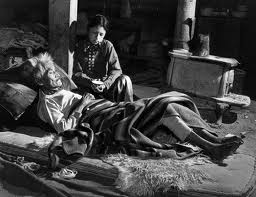 5. People whose body are too weak to take herbs; it's not easy to treat them. This happens to people whose stomach and spleen functions are so weak they can't help to take it and digest and absorb the efficacy of foods or herbs. It'll take a very long time to treat such cases. It can be equally long to use acupuncture/tuina to treat because the body, too, reacts very slowly to external stimulants into the body. For such people, they have to start taking very original, simple and organic foods to have a good start to recover their spleen and stomach functions, before other organs can benefit from it.
 6. People who believe in witchcraft but not in medicine; it's not easy to treat them. There are people who believe much more in deities or spirits, be they up there in heaven or down there in hell. Even though I talk about the relationship of body, mind and soul with my patients, I tend not to get into the soul part. I believe we are who we are by the way we think, talk, interact, and act with choice. And therefore we should just do our parts well on earth. There are situations, however, I do share my thoughts on souls with someone I suspect involves beyond physical or mental problems.
For anyone who's found to have one of the scenario, it's quite difficult to treat and must be approached with great care.
In short, those that aren't rational and don't take care of their bodies well are not easy to treat.
If I may add some of my own ideas of 'difficult cases' or 'not-easily-treatable cases', I'd say:
 7. People that indulge themselves in desires (Seeing beauty, tasting great foods, smelling sweet scents, hearing sexy voices, touching softness and sophistication) especially the sexual pleasure; it's not easy to treat their illnesses. All indulgence in senses exhaust energy, depending which organs is more responsible over which senses. Over activity in sex reduces original kidney qi, the kidney energy, which is the ultimate reservoir of all energies. When it's not sufficient, all functions of other organs go down dramatically.
 8. People who want only fast relief or simple ways out; it's not easy to treat their medical problems. Fast reliefs are usually symptomatic relief, they hardly target on the real internal problems that give rise to the illnesses. Similarly, people who are impatient or just look for 'miraculous' cure; it's difficult to help either.
 9. People who have yet to find a balance of things and issues; it's not easy to treat their diseases. These people tend to blame most things on others and create unnecessary conflicts and dismays in life. They may also over worry or be lustful over materialistic items. There are also people who think they can plan most things like 20 years ahead but then ignore how to live to the fullest these very days. When a balance isn't there, the mind will be occupied by tedious things in life and lose her main direction. Mind is more powerful than the body... in a way. Please strive to strike a balance of things and issues.
 10. The list goes on; but the not-so crucial ones let's not worry about them. And some of them overlap too. Remember, live at this very moment.
Now, do we still wonder why there are so many difficult-to-treat illnesses in the world?
Or care to shed your own ideas of how things can be better dealt with?
PS:
- The writing's from 六不治(Liu Bu Zhi; Six-Not-Treatable) of 扁鵲(Bian Que), recorded by 司馬遷(SiMa Qian) in his historical records of 《史記》(Shi Ji; History Record; Historical and literature records from roughly 3000 B.C. to 122 B.C., in China). According to what Mr. SiMa wrote, Bian Que lived during the era of 春秋(Chun Qiu; Spring Autumn; 770 B.C. - 476 B.C.), practiced medicine in countries of 齊(Qi) and 趙(Zhao). Bian Que's stories span a time frame of a few hundred years (A debate questioned by many scholars to be comprising of many reasons). A small section of the the book 《史記》 recorded Bian Que's exceptional (and miraculous and unbelievable) therapeutic skills.
- The Chinese characters are in old/complicated versions to reflect the original feel.


